
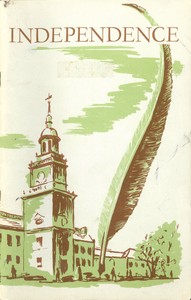
Independence National Historical Park, Philadelphia, Pa. by Edward M. Riley
Most of us know the basic story: the Declaration of Independence was signed in Philadelphia in 1776. Edward M. Riley's book starts where that story ends for most people. Independence National Historical Park, Philadelphia, Pa. isn't about the Revolution itself. It's about what happened to the physical places where it happened, long after the fireworks faded.
The Story
The book tracks the long, messy journey from a collection of aging, repurposed buildings in a busy city to a unified national park. For years after independence, Independence Hall was just another city building. It was a courthouse, it hosted everything from political conventions to art shows, and it was in rough shape. As the 19th century turned into the 20th, these sites were in real danger. Some were overshadowed by new construction, others were simply falling down.
Riley lays out the unlikely rescue mission. He introduces you to the people—local historians, determined architects, and eventually federal planners—who saw these places not as old real estate, but as essential touchstones. The book walks you through the political battles, the architectural debates (like the controversial decision to tear down later additions to 'restore' a colonial look), and the massive effort to assemble the land piece by piece. The central drama is whether a modern American city would choose to preserve its most famous birthplace, and what exactly 'preservation' should even mean.
Why You Should Read It
This book changed how I see national parks and historic sites. It's easy to think places like Independence Hall just always existed as perfect monuments. Riley shows they are the result of choices, arguments, and hard work. You get a real sense of the tension between progress and preservation. Should a city freeze in time for the sake of history? The debates he describes from the 1940s and 50s feel surprisingly fresh today.
It also makes the park feel more human. Knowing that the serene, grassy mall was once a crowded neighborhood of shops and homes adds a whole new layer. The park isn't just a stage set for 1776; it's a record of the 1950s' idea of what 1776 should look like. That's fascinating.
Final Verdict
Perfect for history buffs who enjoy 'how-did-this-get-here' stories more than just battle narratives. It's also great for anyone who's visited Philadelphia and wondered about the city around the park. While it's packed with detail, Riley writes with a clear passion for the subject that keeps it from feeling dry. This isn't a flashy page-turner, but it is a deeply satisfying look at the making of an American icon. You'll never look at a preserved historic building the same way again.
This digital edition is based on a public domain text. You do not need permission to reproduce this work.




Kimberly Robinson
9 months agoFive stars!