
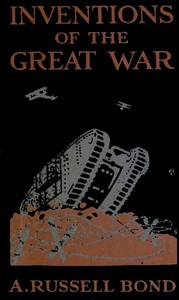
Inventions of the Great War by A. Russell Bond
Forget the dusty history books that just list dates and troop movements. A. Russell Bond's Inventions of the Great War throws you into the workshops, labs, and desperate brainstorming sessions of World War I. Bond wasn't a distant historian; he was an electrical engineer who served during the war, giving him a front-row seat to the technological revolution happening in the midst of the stalemate.
The Story
There isn't a single plot, but a series of interconnected stories about necessity being the mother of invention. The book walks you through the major problems each side faced: how to break the deadlock of trench warfare, how to communicate across noisy battlefields, how to protect soldiers from new threats, and how to take the fight to the air and sea. Each chapter focuses on a specific invention or group of inventions. You'll follow the clunky, early development of the tank from a sketch to a battlefield game-changer. You'll see the evolution of aircraft from flimsy reconnaissance scouts to weapons of war. Bond explains the science and mechanics in a way that's clear without being simplistic, whether he's talking about sonar, gas masks, or the grim logistics of chemical warfare.
Why You Should Read It
This book changed my perspective. We live in a world shaped by these inventions, but we rarely connect them back to the sheer, brutal necessity of that war. Bond’s writing has an authentic, almost conversational tone. You can feel his engineer's fascination with how things work, mixed with the sobering reality of their application. He doesn't glorify war; instead, he highlights the incredible human ingenuity that was unleashed, for both good and terrible purposes. It’s a powerful reminder that our greatest leaps forward often come from our darkest times. Reading it, you start to see the fingerprints of World War I on everything from modern medicine to your smartphone.
Final Verdict
Perfect for history buffs who are tired of the same old narratives, and absolutely ideal for anyone who loves tech, engineering, or innovation stories. If you enjoy shows about how things are built or the 'Eureka!' moments of science, you'll find a whole book of them here. It’s also a great pick for readers interested in the human side of history—the thinkers and tinkerers who changed the world from behind the lines. Just be prepared to have your view of the early 20th century permanently altered.
This text is dedicated to the public domain. You do not need permission to reproduce this work.
James Perez
5 months agoInitially, I was looking for a specific answer, but the author clearly has a deep mastery of the subject matter. The insights gained here are worth every minute of reading.
Elizabeth Wilson
1 year agoMy first impression was quite positive because the practical checklists included are a great touch for real-world use. The price-to-value ratio here is simply unbeatable.
Donald Smith
4 months agoThe author provides a very nuanced critique of current methodologies.
Emily Garcia
9 months agoI decided to give this a try based on a colleague's recommendation, the bibliography and references suggest a high level of research and authority. The price-to-value ratio here is simply unbeatable.







Thomas Smith
2 years agoHaving read the author's previous works, the author manages to bridge the gap between theory and practice effectively. This should be on the reading list of every serious professional.