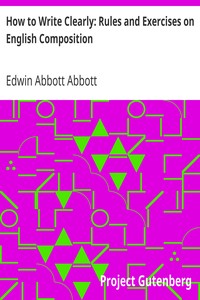
How to Write Clearly: Rules and Exercises on English Composition by Abbott
Okay, let's be clear about what this book isn't. It's not a novel, and it doesn't have characters or a plot in the traditional sense. Think of it more like a friendly coach's playbook for your sentences.
The Story
The 'story' here is the journey from messy, confusing writing to clean, direct communication. Edwin Abbott, a schoolmaster from the Victorian era, lays out a simple premise: unclear writing is a choice, and we can choose to be better. He organizes this journey into a series of rules. Each rule tackles a specific bad habit, like using weak passive voice ('The ball was thrown by the boy') instead of strong active voice ('The boy threw the ball'), or burying your main point in the middle of a long sentence. After explaining each rule, he gives you exercises. You read a clunky, awkward sentence and then practice rewriting it to be clear and forceful. The whole book is built on this 'here's the problem, now you fix it' method.
Why You Should Read It
What surprised me most was how modern it feels. Even though it was written when people used quill pens, the problems Abbott identifies are the exact ones we see today in corporate memos, academic papers, and confusing government forms. His core message is incredibly freeing: you don't need big words to sound smart; you need clear ideas. Working through the exercises is humbling—you realize how often you write in circles without saying anything. It trains your eye to see clutter in your own writing. This isn't about creative flair; it's about the muscular, straightforward prose that gets work done and ideas across.
Final Verdict
This is the perfect book for anyone who writes as part of their job—students, bloggers, managers, or aspiring authors. It's especially great if you feel your writing is often misunderstood or if you get feedback that it's 'too wordy.' It’s a short, no-nonsense toolkit. If you want to write emails people actually read, reports that get to the point, or stories with crisp sentences, Abbott's little guide from 1876 is one of the best investments you can make. Just be ready for it to change how you read everything else, too.
This book is widely considered to be in the public domain. It is now common property for all to enjoy.
Linda Brown
1 year agoI have to admit, the pacing is just right, keeping you engaged. I would gladly recommend this title.
Sarah Thompson
1 year agoGreat reference material for my coursework.

Liam Johnson
8 months agoFrom the very first page, the character development leaves a lasting impact. Absolutely essential reading.