
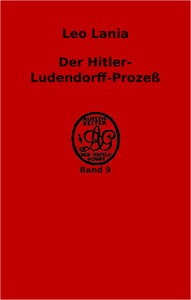
Der Hitler-Ludendorff-Prozeß by Leo Lania
In November 1923, Adolf Hitler and a band of followers tried to overthrow the German government in Munich. It failed miserably. The Hitler-Ludendorff-Prozeß is Leo Lania's eyewitness account of what happened next: the high-profile treason trial in early 1924. Instead of a swift condemnation, the courtroom became a stage. Hitler, the defendant, seized the spotlight to give long, fiery speeches about national betrayal and destiny, while the judges often let him. His famous co-defendant, General Erich Ludendorff, was acquitted entirely, lending an aura of respectability to the whole affair. Though Hitler was found guilty, the sentence was a shockingly light minimum security confinement, where he wrote Mein Kampf. Lania, a sharp observer, details how the trial was less about justice and more about the fragile Weimar Republic's inability to confront a threat from the far right.
Why You Should Read It
This isn't a dry history book. Reading Lania feels like getting a urgent memo from the past. His writing has the energy and clarity of a great reporter on a huge story. He makes you feel the tension in the room—the nervous judges, the captivated audience, Hitler's calculating performance. The real power of the book is how it frames this single event as a massive failure. It shows that Hitler's rise wasn't inevitable; it was enabled. Every time the judge failed to gavel him down, every moment of deference shown to Ludendorff, was a brick in the path to 1933. It's a masterclass in how democracies can falter by playing by the rules while their enemies do not.
Final Verdict
Perfect for anyone interested in 20th-century history, the roots of fascism, or political psychology. It's especially gripping if you enjoy narratives that focus on a single, pivotal event to explain a larger disaster. The book is concise and direct, so it won't overwhelm a casual reader, but the insights are deep enough for a history buff. If you've ever asked, "How could they have let that happen?" this book provides a clear, chilling, and very specific answer from someone who saw it unfold.
You are viewing a work that belongs to the global public domain. Thank you for supporting open literature.
Edward Lopez
8 months agoFrom the very first page, the depth of research presented here is truly commendable. I learned so much from this.
Patricia Hernandez
1 year agoGreat read!
Joseph Moore
4 months agoFinally found time to read this!




Elizabeth Hernandez
8 months agoThe research depth is palpable from the very first chapter.