
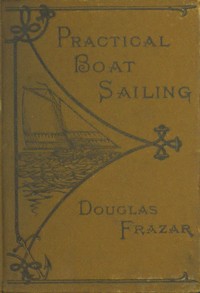
Practical Boat-Sailing: A Concise and Simple Treatise by Douglas Frazar
Let's be clear: this isn't a novel. There's no dashing captain or sea monster. But it tells a story—the story of how to handle a boat. Published in 1875, it was written for the everyday person who wanted to learn to sail, not for seasoned naval officers.
The Story
Frazar walks you through everything, step-by-step. He starts with the absolute basics: the parts of a boat, the different kinds of sails, and what all that confusing rope is actually for. He then moves on to the real meat: how to get the boat moving, how to steer, how to change direction (tacking and jibing), and what to do when the weather turns nasty. The 'plot' is your progression from a clueless landlubber to someone who can confidently take a small sailboat out on the water and, most importantly, bring it back.
Why You Should Read It
What blew me away was the voice. Frazar writes with a calm, patient authority. You can tell he's done this a thousand times. There's a wonderful lack of fluff. He explains complex maneuvers in simple, direct language. Reading it, you feel like you're getting advice passed down through generations. It cuts through all the modern noise about the 'latest and greatest' and focuses on the core, unchanging principles of wind and water. It’s surprisingly philosophical in its simplicity. It reminds you that sailing, at its heart, is a raw and beautiful conversation with nature.
Final Verdict
This book is perfect for two kinds of people. First, for new sailors who want to understand the 'why' behind the 'how.' It builds a fantastic foundation that makes modern manuals easier to grasp. Second, it's a treasure for history lovers and anyone who enjoys primary sources. It’s a direct window into the 19th-century mind and a manual that has genuinely stood the test of time. If you want to learn sailing from its historical roots, with a wise old salt as your guide, this is your book. Just be prepared to learn some proper nautical terms!
This digital edition is based on a public domain text. You do not need permission to reproduce this work.







Jessica Hill
1 year agoBased on the summary, I decided to read it and it challenges the reader's perspective in an intellectual way. I learned so much from this.