
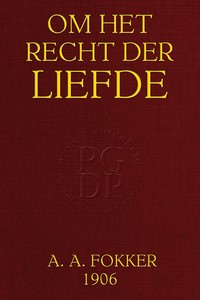
Om het recht der liefde by Abraham Anthony Fokker
I picked up this old book mostly out of curiosity—it’s not one you see on modern shelves. But from the first chapter, I was hooked. It’s a story that feels surprisingly immediate, even though it was written over a century ago.
The Story
The novel follows Maarten van Doorn, a principled but somewhat naive Dutch civil servant. His assignment seems straightforward: travel to a small island in the Dutch East Indies and legally resolve a heated dispute over plantation ownership between a local ruler and a Dutch settler. However, Maarten quickly realizes the situation is a tinderbox. Colonial authority, ancient customary law, and personal grudges are all mixed together. Complicating everything is his growing, undeniable connection to Sari, the intelligent and strong-willed daughter of the local leader. Their relationship becomes the focal point of the entire conflict, forcing Maarten to choose between the rigid legal code he’s sworn to uphold and the pull of a love that defies every rule his society has built.
Why You Should Read It
What struck me most wasn’t just the romance, but how Fokker uses it to expose the raw nerves of colonialism. This isn’t a grand, sweeping epic of empires; it’s a close-up, personal look at how systems of power crush individual lives. Maarten isn’t a villain, but his crisis of conscience makes you ask hard questions about complicity. Sari is far from a passive love interest—her struggle to navigate two worlds gives the story its real heart. Fokker doesn’t offer easy answers. Instead, he sits you right in the middle of the mess, making you feel the weight of every impossible decision.
Final Verdict
This book is a hidden gem for readers who love historical fiction that focuses on moral dilemmas over battlefield drama. If you enjoyed the cultural clashes in books like ‘The Poisonwood Bible’ or the tense, personal stakes of ‘The Remains of the Day’, you’ll find a lot to love here. It’s also perfect for anyone interested in post-colonial literature and the often-overlooked Dutch colonial experience. Be prepared for a story that’s thoughtful, a little heartbreaking, and incredibly human. Just don’t expect a tidy, happy ending—the power of this book is in its difficult, lingering questions.
You are viewing a work that belongs to the global public domain. Access is open to everyone around the world.
Thomas Lopez
10 months agoThe layout of the digital version made it easy to start immediately, the visual layout and supporting data make the reading experience very smooth. I'm genuinely impressed by the quality of this digital edition.





Charles Taylor
1 year agoRight from the opening paragraph, the argument presented in the middle section is particularly compelling. I'll be citing this in my upcoming project.