
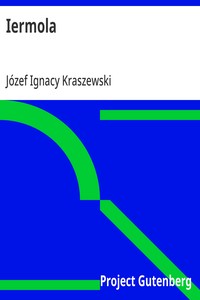
Iermola by Józef Ignacy Kraszewski
Let's set the scene: 19th-century rural Poland. Life is hard, community is everything, and tradition rules. Into this world steps Iermola, an aging, simple miller living a solitary life in a run-down hut. His quiet existence is shattered when he discovers an abandoned infant. Against all logic—his poverty, his age, the scorn of his neighbors—he chooses to raise the boy as his own son. He names him Radionek.
The Story
The plot follows Iermola's beautiful, painful struggle to be a father. We see him learn to care for a baby, scrounge for food, and face constant judgment. The village sees him as a fool; the local nobility sees the child as a potential pawn. As Radionek grows, new threats emerge. Who were his real parents? Could someone with power and money come to claim him? The tension builds not from action, but from the quiet dread that this fragile, beautiful family Iermola built could be torn apart by forces he can't control. It's a story about the love that creates a family, and the world that tries to define it by bloodlines and social class.
Why You Should Read It
This book is a masterclass in character. Iermola is one of the most genuine, quietly heroic figures I've read. His love isn't loud or poetic; it's shown in exhausted nights, shared crusts of bread, and a stubborn refusal to give up. Kraszewski paints the village life with such detail—you can smell the forest, feel the chill of the hut, and hear the gossip. It makes Iermola's stand against that world so powerful. The central theme—that family is a choice, an act of daily devotion—feels incredibly modern. It made me think deeply about my own definitions of love and duty.
Final Verdict
Iermola is perfect for readers who love deep, slow-burn character studies and historical fiction that focuses on everyday people, not kings and queens. If you enjoyed the emotional weight of a novel like Kristin Lavransdatter or the detailed societal portraits of George Eliot, you'll find a lot to love here. It's not a fast-paced adventure; it's a thoughtful, moving, and sometimes heartbreaking portrait of an ordinary man doing an extraordinary thing. A true hidden gem of classic literature.
There are no legal restrictions on this material. Access is open to everyone around the world.
Mary Lee
1 month agoI appreciate how this edition approaches the core problem, the attention to detail regarding the core terminology is flawless. It cleared up a lot of the confusion I had previously.
Charles Scott
7 months agoWithout a doubt, it challenges the reader's perspective in an intellectual way. Highly recommended.
Melissa Williams
1 year agoPerfect.
Kevin Smith
1 year agoI stumbled upon this title and it provides a comprehensive overview perfect for everyone. Highly recommended.
Barbara Hernandez
8 months agoThis was exactly the kind of deep dive I was searching for, the formatting on mobile devices is surprisingly crisp and clear. I’ll definitely be revisiting some of these chapters again soon.