
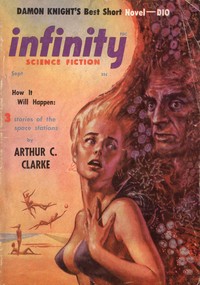
Earth transit by Charles L. Fontenay
I just finished Charles L. Fontenay's Earth Transit, and it's one of those classic sci-fi novels that sticks with you because of the big questions it asks, not the lasers it fires.
The Story
The Earth is on its last legs, ecologically spent. Humanity's last hope is Project Argo, a colossal starship set for a multi-century journey to a promising new world. We follow the first crew and colonists as they say goodbye to everything they've ever known and enter hibernation for the long haul. The twist? They won't be the ones to land. Their descendants, born and raised entirely aboard the ship, will be the ones to complete the mission.
The book smartly jumps through time, showing us key moments across the voyage. We see the initial idealism harden into routine, then dogma. We watch as the original Earth becomes a myth, a half-remembered story. Conflicts arise between those who rigidly follow the Flight Plan and those who want to adapt, or even forget the mission entirely. The central tension isn't about aliens or engine failure; it's about whether a society can maintain its purpose over generations when that purpose is just a story in a history file.
Why You Should Read It
What I loved was how personal it felt. Fontenay populates his ship with real people, not just archetypes. You feel the claustrophobia of the metal corridors and the weight of the unknown outside. The characters grapple with faith, leadership, and rebellion in ways that feel immediate, even though their setting is utterly alien. The book is really about legacy. What parts of our culture are essential to bring along? What old hatreds or mistakes will we accidentally pack? It's a mirror held up to our own world, asking what we're building for the future, right now.
Final Verdict
This is perfect for readers who love the 'idea-driven' side of science fiction. Think Arthur C. Clarke or early Ursula K. Le Guin. If your favorite part of a space opera is the scene on the generation ship, not the final battle, you'll devour this. It's a thoughtful, sometimes slow-burning, but ultimately rewarding look at the human experiment, set against the coldest, darkest lab imaginable: the void between stars. A true hidden gem from the genre's golden age.
No rights are reserved for this publication. Preserving history for future generations.
Ashley Wilson
11 months agoThe peer-reviewed feel of this content gives me great confidence.
Kimberly Garcia
1 month agoHaving explored several resources on this, I find that the case studies and practical examples provided add immense value. I am looking forward to the author's next publication.
Matthew Taylor
9 months agoIt took me a while to process the complex ideas here, but the language used is precise without being overly academic or confusing. A trustworthy resource that I'll keep in my digital library.
John Gonzalez
4 months agoThe clarity of the concluding remarks is very professional.

Emily Taylor
2 years agoAs a professional in this niche, the concise summaries at the end of each section are a lifesaver. A solid investment for anyone's personal development.